2022 Round-Up and 2023 Goals

This past year has been…interesting…to say the least. If I were to try and describe it in a pithy manner, I’d say it’s been a series of successful disappointments.

Two years in a row I was preparing for the Tesla Hertz 100 Mile Ultramarathon on Long Island, NY. In 2021, I had to withdraw and defer my entry to 2022 because my best friend was getting married on the same day as the race (the jerk), and I was raring to go for the 2022 race. Training had its ups and downs, and for the most part I’d say it was positive. I started the year with the intention of running a 12-Hour race on a 3.1 mile looped course as a gear test and mental prep for the 100. This started off frustratingly. Just as I was rounding out the first mile of the first loop, I had stepped slightly off trail to get around a couple runners that were walking side-by-side, and stepped on a root and cranked my ankle pretty badly. I was able to ‘walk it off’ as I kept on going, just repeating to myself “you’re not made of glass.” I was doing pretty well with the ankle for the most part, and while it was a little painful it wasn’t too bad. I was able to keep going for another 17 miles, before getting overeager on a downhill and rolled the same ankle twice in rapid succession.

After the double roll, I walked it in to finish the loop and opted to have a little sit down, along with some food and a change of socks. Pulling off my shoes and socks I watched as my ankle swelled up to at least twice its normal size. I knew I was done, but needed to keep trying. I swapped the socks, laced up and got back on the trail. I tried to run and walk, but I just couldn’t keep pushing on the ankle and had to tap out. I made it out to 4 hours, and while I consider it a DNF, it technically wasn’t as timed races are simply meant to cover as much distance within the time limit.

I was pretty bummed as I couldn’t put any weight on the ankle the next day or the day after, and had it checked out. There was no break, which was a huge positive, and went into physical therapy. The PT was fantastic and got range of motion back within a week and I was able to start putting some weight on the joint again. I got back into lifting, and was comfortably able to start getting some running back in after about a month. Around this time I opted to connect with Complete Human Performance and hire a coach to program my ultra prep. I realized that I had no idea what I was doing, and was simply flying by the seat of my pants. I got paired with Nickademus de la Rosa, who has been an absolutely fantastic coach, whom I’ve now been working with for 9 months. As we built up the running volume, we dialed back the heavy lifting and focused on single leg stability and ankle strengthening to bring my ankle back into running shape.

We opted for another tune-up race in June to test out gear, hydration and nutrition strategies. This was a 60k taking place on a 15k loop. I crushed the first loop very comfortably, but the second loop took me down a notch. I sat down after the 2nd and realized everything was cramping up. I tried to start the 3rd loop and my left hip and leg were completely shot. The cramping made it feel like the muscle was going to rip off the bone every time I started to run. There were some miscalculations along the way, and by some I mean it was replete with miscalculations. I basically ignored my nutrition and hydration strategies, which lead to the cramping, and didn’t consider the climate/temperature, so instead of overcompensating I massively undercompensated for the humidity and weather. At 30k, I had to tap out.

From here, we continued building out to Tesla Hertz. Training was generally pretty good, although because of family obligations along the way I missed some key higher volume weeks and ended up only really hitting 4 weeks of serious running volume, rather than 8-10 that would have been ideal. The programming from Nickademus was solid, but I was unable to meet the requirements along the way.

Long story short, I had to tap out after hitting 60 miles of the 100. This was the farthest I’d ever gone in my entire life, and I did it generally without stopping. I managed to pull my hamstring very early on, and I was still able to keep going for 60 miles. So while this was technically a failure on my part, I still felt super accomplished and generally happy with my performance. I didn’t make any major mistakes along the way with nutrition or hydration and if it hadn’t been for the hamstrings, I think I could have kept going.

Anyway, here we are at the end of the year. Post-Tesla Hertz, we’ve entered a lower volume but higher intensity phase of training, but the last 2 weeks have basically been a wash because I came down with the flu and felt like death. C’est la vie.

On the flip side, I’m back to lifting on the heavier side, following a bit of a conjugate/concurrent training split. Originally, I was lifting 3x per week, but I’m going to mess around with 4x per week split with 2 lower and 2 upper going into the new year. This week starts the new training cycle, so here’s how it will look combining running and lifting:

Day 1: 400-800m Intervals + ME Lower – Heavy squat 1-5 reps @ 9-10, Heavy single leg work, RDLs, abs

Day 2: Endurance run + ME Upper – Heavy bench 1-5 reps @ 9-10, heavy rowing, upperback and biceps

Day 3: Endurance run + DE Lower – Speed squats and speed deadlifts/ME deadlifts (alternating weekly for pulls), heavy single leg work, abs

Day 4: 200-400m repeats + DE Upper – Speed bench, heavy shoulders and vertical pulling

I’ve got a few hard goals for this year, but I think they’re all doable:

  1. Sub-4 hour marathon: Running the Millbrook Marathon in April
  2. Complete 60k: Going back to the Redwing Trail Challenge for redemption after cramping out last year
  3. Squat 400, Bench Press 275-300 and Deadlift 500

So it’s all doable stuff, I think, just need to stick to the programming and keep my nose to ground.

Anyway, maybe I’ll actually log my training for this year…unlike what ended up happening for 2022.

Hybrid Conjugate – Cycle 1

Let me start off this post with an exercise breakdown for each training day, and then I can go into more specifics:

  • Day 1 – Strength
    • Bench Press (Heavy) – 2+ set
    • Bench Press (Volume) – 2 sets of 6 reps
    • Speed Bench – 8 sets of 3
    • Pull-ups – 3 sets of 5-10
    • Barbell Rows – 2 sets of 4
  • Day 2 – Strength
    • Low Bar Squat (Heavy) – 2+ set
    • Low Bar Squat (Paused) – 2 sets of 6
    • Snatch-Grip Deadlift – 2 sets of 8
    • Speed Deadlifts – 8 sets of 2
    • Front Squat – 3 sets of 15
  • Day 2 – Running
    • Tempo run (30-90 minutes)
  • Day 3 – Running
    • Recovery run (30-60 minutes)
  • Day 4 – Strength
    • Deficit Bench Press – 4 sets of 5
    • Close-Grip Bench Press – 3 sets of 6
    • Lateral Raise – 3 sets of 8
    • Barbell Curl – 2 sets of 8
  • Day 5 – Strength
    • Low Bar Squat (Tempo) – 3 sets of 8
    • Split Squat – 3 sets of 8
    • Romanian Deadlift – 2 sets of 8
    • Walking Lunge – 4 sets of 15
    • Ab Wheel Rollout – 3 sets of 8
  • Day 5 – Running
    • Tempo Run (30-90 minutes)
  • Day 6 – Running
    • Long Run (2-6 hours)
  • Day 7 – Running
    • Recovery Run (20-40 minutes) or Rest

My plan during the first cycle was to wave the intensity percentage for the heavy work, so that I went from 82% to 92% for a 2+ set from week 1 to week 3, and then wave back down to 85% to 95% from week 4 to week 6. For supplemental work, I worked with a volumizing approach, by keeping weights static each week, but increasing the number of sets. Speed work was waved similarly to the heavy work. And the hypertrophy work maintained volume week to week, but I increased intensity each week.

I’ll talk about some highlights in a minute, but let’s go over the mistakes:

  • Pushing volume through more sets was the wrong approach. I forgot one of the basic tenets of this style of programming is to the bare minimum necessary to make progress. I’m better served by pushing the intensity for fewer sets rather than forcing additional volume each week. For example, I went from 2 sets of 8 on snatch-grip deadlifts, and instead of getting stronger on the movement, I was pushing the number of volumes with a static weight. so I worked up to 6 sets of 8 with the same static weight. This probably did help get me stronger, but I also dramatically increased the wear and tear through sheer volumization.
    • As a subpoint to this one, I was following a volumizing approach with more than one exercise per workout, and taking the volumizing too far. Each cycle is 6 weeks long and I was adding another set each week, that’s just too long without any progression to the load, and deload of the volume.
  • Not setting hard RPE caps on work sets to auto-regulate intensity and effort. I was pushing pedal to the metal too often, rather then at pre-determined times. This left me very exhausted and while beneficial in the short-term, it would have been a recipe for disaster in the long-run.
  • Pushing too much intensity on the tempo work. I was attempting to hit tempo ranges for 30-60 minutes straight, and this type of work is just too stressful to maintain week-on-week.
  • Last mistake, not keeping long run intensity low enough to have a solid aerobic benefit. I was pushing too far into the moderate intensity range for my long runs, and this can have an net negative impact.

All that said, there were some highlights to this first cycle of the program:

  • Bench Press – 205×7 @ 9
  • Squat – 270×10 @ 8
  • Snatch-grip Deadlift – 275×8 for 3 sets

All that said, I’ve rectified the mistakes from the last block with my lifting, and I’m still working on cleaning up the running aspect, but just laying bricks right now. Seeing some serious progress with the lifting so far.

I’ll start providing weekly updates on training after this.

Hybrid Conjugate

After much screwing around with various training templates/programs, and really trying to figure out what fits just right into my training week (and my normal life week), I finally wrote something down that I think will work pretty well. I tested it out for 1 full 6-week cycle, and I think I’ve got a pretty good handle on how I want to program moving forward.

Well, let me back up a little bit and give a little color to what I’m trying to do. I’ve been lifting weights for a long time, but my background is more in endurance sport with a history of competitive swimming. After highschool, and through college, swimming fell away and martial arts took over. I focused on competing in karate at this time, but I was still consistently lifting each week. Years ticked by, and running entered my life. I loved running. I loved the freedom of moving my body through space and trying to get my body to do it as efficiently as possible.

In 2009, I attempted my first marathon. I was somewhat undertrained, having only logged 1 long run of 18 miles in preparation, but I figured I was signed up so I might as well give it a go anyway. Twenty miles in, and my legs started cramping up, by mile 21 I had to sit down and weight for the race’s emergency vehicle to swing by and ride back to the start. Not exactly my proudest moment, but it is what it is. I knew I wanted to get back and run the marathon again at some point, but this is where lifting really started to take over.

Anyway, flash forward to 2020 and the pandemic started. I was working from home which was great for trying to lift consistently, but it also meant that I was spending 12 hours per day staring at a computer screen, and the only sunlight I saw was the reflection of the sun off of my computer monitor coming from the window behind me. I realized that I needed to simply get outside and get fresh air, so I bought a new pair of running shoes and got back on the roads. Around this time was when I re-read the book Ultramarathon Man, by Dean Karnazes. I’ve read this book more times than I an remember and each time it’s gotten me amped up to start running again, but this time I think it’s really sticking. After running consistently for a few months, I signed up for a marathon in April 2021.

Over the last few years, I’ve had a habit of picking up training books that I’ve heard about, one that I grabbed was called The Hybrid Athlete by Alex Viada. I’ve talked about him in a previous post, but bottom line the man is inhumanly strong and has incredible levels of endurance. Plus, he trains others to do the same thing.

I’m using his training templates as guidelines on how to progress my own training moving forward, and I think I’ve finally made a bit of a breakthrough, in terms of setting up my programming. I’m going to include the general layout below, and in subsequent posts I’ll outline how I programmed the first Cycle and the problems I think I made and how I’m fixing them for the second cycle.

Program Structure:

  • Day 1: Upper Strength – this day is a combination of force production (heavy work) and rate of force production (speed work), with a heavy.
  • Day 2: Lower Strength and Tempo Run – another combination of heavy and speed work on this day, coupled with a run. Ideally, I would want the run to happen earlier in the day as this is my priority, but it really doesn’t matter much as there’s sufficient amount of time in between to allow for enough recovery to keep one workout from interfering too severely with the other.
  • Day 3: Recovery Run – just a shake out run, get some bloodflow through the lower body after the beating it got the day before. This can be done on the AirDyne or bike as well, the idea is simply to move at a low intensity.
  • Day 4: Upper Hypertrophy – volume and intensity is the name of the game here. Muscle loss is a pretty significant concern in this type of program, so hypertrophy training is emphasized.
  • Day 5: Lower Hypertrophy and Tempo Run – as above, volume and intensity is key here as hypertrophy stimulus is important to maintain muscle mass on this kind of a program.
  • Day 6: Long Run – depending on the type of race being trained for, this can go anywhere from 1 hour up to 6 hours (or longer if training for an exceptionally long race). As I’m training specifically for a marathon, I’m looking at 1-3 hour runs primarily.
  • Day 7: Rest or Recovery Run – as above, just getting blood flowing. If/when I’m training for an ultramarathon, this will become a secondary long run every 3 or 4 weeks to have back-to-back long runs.

So there it is, the general program structure. On the strength days, volume is relatively low and intensity is relatively high, for the express purpose of pushing maximal strength. On the hypertrophy days, the volume is increased fairly significantly, and intensity is moderated. Sets are controlled based on RPE, with the RPE being waved upward each week, and resetting mid-cycle. I’ll talk about this more as I get into cycle specifics.

Anyway, this is a fair amount of work, and it might look like it will be counterintuitive, but seeing as I’ve completed the first cycle, I have a pretty good idea of what is and isn’t working. The main point here is the consolidation of stressors, and maximizing rest time as much as possible. With the above program structure, my lower body days are particularly intense, but upper body days provide full lower body recovery, and Sunday is either another light/easy run, or it’s a day completely off.

Here we go again!

Oh! Well, would you look at that! It’s a new training program…again! And guess what, I have a completely different training focus this time around. Isn’t change wonderful?

Anyway, the point of the matter is that I’m a little sick of training ‘for powerlifting.’ Mainly because, I’m never really training for powerlifting. I’m using the big 3 lifts (squat, bench press and deadlift) and just force feeding these competition-style movements on my body without really ever thinking about the purpose, and function.

The fact of the matter is that I’m horribly de-trained, and de-conditioned to these movements. I’m doing myself no favors by guesstimating my maxes, to estimate training maxes, and then I’m force feeding relatively high intensity (as percentage of training max) into these lifts every week. My body just doesn’t care for it. The smarter, and more effective, approach would be to take very low percentages, and high volume and gradually work my way up into moderate intensities, and then start working into the heavier intensities over time.

The long and the short of it is that I’m disenchanted with the competitive powerlifts. They’re fine movements and can be great for developing general strength, but using the straight bar can be taxing if you don’t put in the appropriate effort to achieve the necessary mobility to get into the right positions. And so, my priorities have shifted quite a bit. I’m focusing more on endurance training, and getting faster on my feet for longer distances. I have on my bucket list a desire to eventually run a 100 mile ultramarathon, but I’m not jumping straight into that head first. I’m going to start with a half-marathon at the end of this year (not an official race, but I’m going to train and taper as if it is an official race), and then an official marathon in April 2021. Ideally, I’d like to shoot for a 50 or 100 mile race at the end of 2021, or even 2022.

My plan is to take the long view and avoid injuries and backtracking.

To that end, I’m still lifting, but with a much more generalized focus with an emphasis on developing upperbody muscle, and building on lower body strength with some hypertrophy. I’m lifting 2 days per week, in 2 week blocks, so that’s 4 sessions per block.

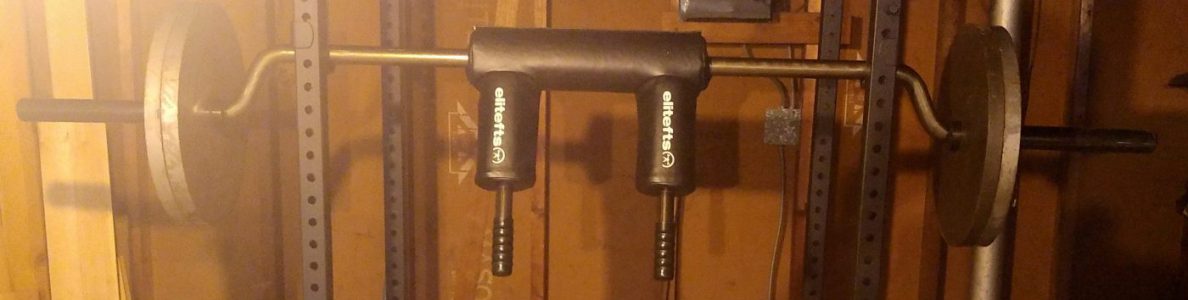
Each workout utilizes 4 movements, repeated progressively over the 4 workouts. First block was the SSB squat vs. 80 pounds of chain working up to a 6RM, followed by staggered stance trap bar RDLs for 3 sets of 10, then flat dumbbell bench press for 3 sets of 20, and then pull-ups with 1 set of max reps, and then myo-reps with 25% of the top set.

This worked pretty well, I got to a fairly decent point on the squats, hitting 255 for a set of 6 with 80lbs of chain. This second block is a little different, I’m using the front-foot elevated zercher split squat for 3 sets of 6, then sumo block pulls for 4 sets of 6, keeping dumbbell bench press and continuing to progress the weight and then finishing with more pull-ups but using a more strength-volume approach with 5 sets of 6 to start and adding reps each workout.

Next block will be a little different again, with some changes to the lower body movements, and haven’t really decided if I’m going to change the upperbody stuff yet, but I guess I’ll figure that out as I go.

Get Healthy – Workout 3 (4/9/2020)

Ok, so workout 3 in the books and it was another good one. I brought the intensity up again as far as lower body work was concerned and went for a much higher volume with a harder unilateral variation (Bulgarian split squats), and then kept the intensity fairly high on the following moves with slow-eccentric push-ups, and body weight scarecrows, which are basically pull aparts using the Olympic rings and your body weight as resistance. These are incredibly challenging and very taxing on the rear delts and upper back.

The nice part about this workout is that it was relatively short, so that I was able to finish the whole thing in less than 40 minutes, and still get a decent amount of time on the Airdyne for some aerobic work. Happy with the workout overall.

The rest of the weekend didn’t work out as well from a training perspective as family-related engagements came up, and kids occupied all of my time. But that is what it is, just have to get back to it today.

Here’s the last workout:

A1. Bulgarian split squats – 150 total reps per leg

A2. Controlled-eccentric push-ups – 50 total reps

A3. Scarecrows – 50 total reps

A4. Back Raises – 50 total reps

A5. Ab wheel rollouts – 15 total reps

Total time: 37:53

B1. Airdyne – 21:30

Get Strong Second (Get Healthy First)

As life has a tendency to do, and more importantly, as my body has a tendency to do, I’ve again experienced some kind of an injury last week. Frankly, I’m both glad and frustrated that I can’t say I hurt my back while lifting…on the flip side, it is simply just frustrating to have to say that I injured my back in my sleep. I’m sure I slept on it funny or something, but whatever the actual cause, my back has been hurting since I woke up Friday morning.

It forced me to push my Friday workout back to Saturday, and then again to Sunday due to life circumstances. Further and further it’s gotten pushed back, and here I am, now on Tuesday, still with any achy back and a small, but fairly major epiphany.

First off, I am going to get in my workout today, I’m definitely at the point that I need to get some movement to get my back feeling better, so that will mean making some training adjustments, but I need to train.

Secondly, in my desire to pursue a newer training program, I forgot a most basic training principle: get stronger.

You might be wondering how I haven’t been focused on this principle, but it’s true. I love training concepts and programming principles, I love reading about them and trying them out, but from a holistic level, none of these principles mean anything when you’re simply just weak.

And I am weak as fuck (or AF, as the kids say these days).

What benefit am I really getting from “speed benching” with 95-115 lbs on the barbell? The same question applies to squatting or deadlifting with 185 lbs.

Simply put: none.

I’m not going to try to finish out the training block as I had originally planned (sticking with the program is important, obviously), but I am going to keep moving. My back is still a mess, and I’m experiencing a fairly significant anterior pelvic tilt. This is generally caused by weak abs and tight hip flexors, among other things, so those are the things that I’m going to be working on.

As I said in the title, Get Strong Second, but getting healthy first is more important. I don’t need heavy loading, and I don’t need a multitude of overly complex programming. I need regular movement, and consistent motor unit recruitment. Once I feel like my base level of physical conditioning is up to par, I will start back up with a basic linear progression (outlined below), but for the time being, I need to start focusing on super light movement mechanics, like body weight squatting, push-ups and deadlifting with an empty barbell, while striving to improve weak links. These weak links are going to be my hamstrings, glutes and core.

Basically right now, I’ll be hitting some kind of movement every day, with an intent of developing my GPP. This will mean some combination of 3-4 of the following: of squat pattern (bilateral or unilateral), some upper body push (generally push-ups), and some upper body (generally pull-ups or inverted rows), deadlift technique work (sumo and RDL), hamstrings and hip work (back raises and glute ham roller hamstrings curls) and abdominal/core work (generally ab wheel and fallouts, as well as some isolation work through flexion and rotation movements).

I’m going to try to avoid overly programming things, I just want to aggregate total volume across the workout and get my heart rate going while hitting the appropriate weak points throughout. Theoretically, the 3-4 exercises should take no more than 30 minutes, which will leave me 30 or so minutes for some aerobic conditioning work by way of weight vest walking and airdyne biking.

Once I’ve reached a condition that I feel is sufficient to start putting in some real work, I’ll take a full week to determine maxes for the main movements I intend to use for the time being (SSB squat, close-grip bench press, sumo deadlift), and then start hitting some straight linear progression workouts. For now, I’m thinking I’ll go with a basic Starting Strength-esque progression where I will perform all 3 movements every workout.

Note: This deviates fairly significantly from Starting Strength programming for a number of reasons:

  1. I’m using a specialty bar for the squat,
  2. I’m performing the sumo deadlift,
  3. I’m performing the close-grip bench press
  4. I’m not alternating my pressing movements each workout
  5. I’m not alternating my pulling movements each workout (generally alternating deadlifts with power cleans).
  6. I’m doing significantly more volume on deadlifts, which is normally prescribed as simply 1 set of 5 reps.

Based on my maxes from the last week of this Condensed Conjugate cycle, I’ll take 75% and perform a 3×5 for squat and bench press, and a 3×3 for sumo deadlifts. I like having some volume for my deadlifts, so this should feel pretty good overall, I think. One more thing that I will add is that I’ll perform an AMRAP on the last set of each lift, depending on how I’m feeling. If I get to the last set and I’m just tired and want to finish the workout, then I’ll just do the requisite reps, but if I’m feeling good on one or more lifts, I’ll throw in an AMRAP and see where I can go with it.

Anyway, this all still a few weeks away, but for now I need to remember the goal, which is to get strong holistically. Take this linear progression as far as I can take it before attempting to throw in any more advanced programming concepts.

Kicking of the 2nd Block

So, here we are, on the cusp of kicking off the 2nd block of my Condensed Conjugate programming. We’re also in the midst of a global pandemic that has basically left everybody quarantined at home in some capacity. I live in New York, north of the New York City, which means that while we aren’t in a full-on lock down, and we are actually allowed to leave the house, I am still working from home full-time and all gyms are closed. This includes the MMA gym that I had been training at.

The initial reason I’d settled on this condensed conjugate set up is simply because I wanted to have the time available to train Brazilian Jiu Jitsu. Now that this isn’t an option, I’m faced with the choice of breaking away from the condensed conjugate structure and following a normal 4 day microcycle, or continuing on. I’m thinking that continuing with the planned structure makes the most sense, but now I have ample time to add in extra training days so that’s what I’m going to do.

My basic plan here is to follow a lower/upper type of split, in which I’ll utilize more bodybuilding focused rep ranges, as I’d like to develop a greater level of hypertrophy, as well as improve my conditioning a bit through the higher volume.

My plan for the next 3 weeks is the following:

Lower Supplemental Training:

A1. High Bar Close Stance Squat – Work up to a heavy set of 6, and then repeat for a total of 3 working sets.

B1. Romanian Deadlifts vs. Monster Mini Bands – Work up to a heavy set of 8, and then repeat for a total of 4 working sets.

C1. Back Raises – 3-5 sets of 15

C2. Reverse Lunge – 3-5 sets of 15

  • Adding load is optional, depending on how challenging the unloaded version is.

D1. Ab Wheel Rollouts – 3-5 sets of 15

Upper Supplemental Training:

A1. Flat Dumbbell Bench Press – 3 sets of 20

B1. American Cambered Grip Bench Press (Grip 2) – Work up to a heavy set of 6, and then repeat for a total of 4 sets

C1. 2-Arm Dumbbell Rows – 5×10

D1. 1-Arm Barbell Row – 5×10

D2. Landmine Russian Twists – 5×10

E1. Barbell Curl – 5×8

____________________________________________________________________________________________

This set-up is obviously much higher volume than my standard training days where I focus more on heavier loading and more explosive lifting, but that’s basically the point. I honestly don’t know how this macrocycle is going to go, this is a significant increase in total volume across the microcycle, and it might be shooting me in the foot for the 2 main training days. My hope is that the increased squatting volume will continue to help my knees feel better, and bring up my overall squat strength again as that has been lagging behind fairly significantly with such a big gap between squat training days.

Training ADD and Consistency

I don’t know about you, but I love reading about new training concepts and looking at training programs and protocols. Not only do I like reading about how other trainers and athletes program sets and reps, and exercise progressions and regressions, I love trying to get into the underlying science that supports the program. The more scientifically supported a particular training program is the more interested I become, but that isn’t to say that anecdotal evidence doesn’t also sway my opinion. There’s a reason that I’ve tried a multitude of programs over the years: linear periodization, Starting Strength, Stronglifts 5×5, 5/3/1, Juggernaut 2.0, Conjugate/Westside, etc.

I’m fairly certain this is far from an exhaustive list, and if I were to consider all of the various bodybuilding-style programs that I’ve ripped out of various bodybuilding magazines, I’m sure the list would be significantly longer. I’ve tried to put at least 3 months at a stretch into each of these programs at the least, and in the case of 5/3/1, I’ve put several years into the program. I’ve seen progress made with each one, and have a serious level of respect for the authors of each of these programs.

The problem is that by sampling each of these training methodologies, I’ve almost certainly short changed my long term progress potential. I’m by no means genetically gifted for lifting, and I’m certainly not winning any powerlifting competitions, but I can guarantee that if I’d had the wherewithal to stick with a single program for an extended period of time, that I’d have seen significantly better success on the big lifts.

At the end of the day, as cliche as it sounds, consistency is key.

But it isn’t enough to simply be consistent in training, you need consistency in training style, and training progression. You often hear the phrase, “Practice makes perfect.” And in spirit, I agree with it, but it isn’t accurate enough. The phrase should really be “Perfect practice makes perfect.”

It’s too easy to practice with shit technique, and as evil begets evil, so to does shit technique beget shit technique.

So what happens if you’re constantly changing your training style, and changing the methods of progression? You stop making progress, and you start to lose the potential that you had.

Every program I listed above has some barometer for progress and success.

  • With programs like 5/3/1 and Juggernaut, you have rep PRs, where every week and every month you’re trying to beat the number of reps you hit on your top set from prior week/month. Simple and straightforward.
  • With the Conjugate/Westside method, you’re trying to beat your 1RM PRs from 6-12 weeks prior, so you’re sticking with the same handful of movements for an extended period of time.
  • With linear periodization or 5×5-style programs, you’re trying to complete the prescribed reps and sets with better form than the prior workout.

So where’s the problem? Well, if I start with 5/3/1 and then jump to Juggernaut, there might not be too much of an issue, but maybe after that I make the switch over to a conjugate program. This system is designed around the concept of exercise variation and staying away from the competitive lifts, which the previous 2 programs focus on.

How do I judge my progress now? The answer is that I can’t, I have to now basically reset, and begin anew with a new set of parameters, and a new system of progression to learn and get accustomed to measuring.

Why do I bring this up today? Well, because I’m still guilty of having training ADD, and I’m constantly looking for the next best program, rather than sticking with the one I’m on. It doesn’t help that I don’t have a specific goal in mind with regards to my training, aside from training consistently. This is both good and bad.

It gives me the freedom to simply have fun with my training (that’s the good), but it also gives me the freedom to simply have fun with my training (yeah, that’s also a bad thing).

Anyway, this is just a point that I, and most others, need to keep in mind. It’s good to experiment and it’s good have fun with your training, but it’s also very important to stick with a program for an extended period of time to be able to see the gradual and consistent progress over that time. If you’re going to make a change to a new program, make small changes so you can make the switch in a way that allows you to see that progress occur.

As an example, if I’m working with 5/3/1 and want to switch to conjugate, then I might start using a greater number of variations for my supplemental movement and work up to a 1RM or 3RM rather than doing volume. Or, I might throw in some dynamic squat and dynamic bench on my deadlift and overhead press days.

I’m working with a conjugate system right now, and sometime in the future, I might want to go back to 5/3/1 or Juggernaut. If that happens, then instead of doing dynamic work, I might turn my dynamic lower day into a condensed squat and deadlift workout, and my dynamic upper in a condensed bench press and overhead press workout using the 5/3/1 structure. Or another good option is that my supplemental work will be the big 4 barbell movements. On my ME Lower day, I’ll do my squat/deadlift variation, and then follow up with 5/3/1 squat sets, on ME Upper the same with bench press, DE Lower with deadlift and DE Upper with overhead press.

Anyway, I don’t really know how to end this post, as I’m starting to ramble, but feel free to let me know if you have any thoughts or questions!

Current Training Plan – Condensed Conjugate

I’ve always been very interested in the programming structure popularized by Louie Simmons and Westside Barbell. It’s often referred to as the Westside Method, or the Conjugate Method, or even concurrent training. Regardless of the name that you use, I’ve always seen it as a fairly ideal system for training GPP for athletes, and while it’s been primarily popularized by powerlifters, I actually do think it’s an ideal system for that.

I’m no authority on training, in general, but this is just my opinion.

That said, my goals right now are not powerlifting-centric. I’m trying to become better conditioned, and stronger, overall. I’ve had quite a few layoffs from training over the past couple of years, and it’s been a challenge (understatement of the year) to string together any number of training days to actually say I’ve been following any kind of plan.

What I settled on, is that I really want to train Brazilian Jiu Jitsu more frequently. I’d like to be getting at least 3 days of training on the mats per week. That meant that I had to sacrifice some weight lifting time, something that I hadn’t been willing to compromise on in the past.

Coming back to the Conjugate Method, I’ve tried to implement it into my programming in the past with a mixed bag of results, but I feel like I’ve never spent long enough with it to really properly vet it. The general structure of the program is organized around a 4 day macrocycle, with 2 days devoted to lower body training and 2 days to upper body training. Those 2 days are split between the Maximal Effort Method (ME) and the Dynamic Effort Method (DE). Basically, you’re devoting one day to lifting heavy and the other to lifting fast.

What didn’t work for me was the 7-day macrocycle. I never had 4 day training days available every week. I tried pushing this out to a 10-day macrocycle, so that I was lifting 3 days per calendar week, but I didn’t devote sufficient time to this, plus I started reading more about hybrid training and consolidation of stressors and figured that the 10-day split didn’t work with my other athletic endeavors.

This brought me to this Condensed Conjugate model, again, something I’ve tried in the past, but never really put enough time into to properly vet it. I recently watched a video by strength coach named Phil Daru, where he discusses his method of training his fighters which is exactly this, and he gave it the name.

Basically, I’m looking at lifting 2 days per week, this is what I can do guaranteed every week:

Day 1 – ME Lower and DE Upper

Day 2 – DE Lower and ME Upper

Because I don’t have accurate maxes for squat and bench press, I’m going based on feel and bar speed on the dynamic days. You can see my first 2 weeks, thus far, in my Training Log to get an idea of how I’ve been structuring these workouts with specifics, but here’s a general guide:

Day 1 Day 1
Movement Sets Reps Intensity Movement Sets Reps Intensity
ME Lower 1 5 RPE 8-9 DE Lower 8 2 RPE 6
Down Sets 3 5 85% of ME weight AMRAP Set 1 AMRAP DE weight
DE Upper 9 3 RPE 6 ME Upper 1 5 RPE 8-9
AMRAP Set 1 AMRAP DE weight Down Sets 3 5 85% of ME weight
Upper Assistance 1 6 AMRAP BW Lower Assistance 1 3 15 BW
Upper Assistance 2 6 AMRAP BW Lower Assistance 2 3 30 Light Band

For the assistance work, I picked mostly body weight type work that would help for hypertrophy and metabolic stress. I went with upper body assistance work on Day 1 where I was doing DE Upper, and then lower body assistance on Day 2 where I was doing DE Lower.

Ideally, I’m going to stick with the assistance movements for 6 weeks, or 2 total macrocycles.

Dynamic working weights were chosen based on bar speed and feel for the first week. On week 2, I added 10lbs to the upper dynamice and added 20lbs to the lower dynamic. If bar speed stays decent on week 2, I’ll add another equal increment for week 3, and then decide how to progress from there for the next 3 week wave. Probably increase volume with the same weight so it’s more of a conditioning block.

Anyway, here’s the basic structure, let me know if you have any questions!

Looking at the End

Well, it’s certainly been a hot minute since the last time I posted anything, training log or otherwise! Life has been a little crazy lately, and I can’t really say anything beyond that. Between sheer laziness about writing anything, getting laid off in June, being unemployed for 2 months, and starting a new job in September, along with simply being injured and unable to train, this year has been pretty much a wash and I’m starting from square one again.

Don’t get me wrong, starting over is hardly a bad thing. I’m happy to be pain-free and finally able to get back to training. But it’s important to acknowledge the obstacles that I’ve had to overcome this year, and be proud of where I’m at.

So all that said, on December 1st, I started a new program. The purpose of it is to recondition myself for lifting, and getting in better shape from a strength perspective in a more general fashion, with some specificity still built in. I’m not training for any competitions or anything like that, just trying to get in better shape so when I do decide to compete, I can put more emphasis on specificity and prepare properly without injuring myself.

The basic structure is utilizing a conjugate-inspired program, but with some fairly significant changes. I’m not following a typical max effort-dynamic effort structure, although I am using similar structure in that I’m working a heavy-light structure with 2 lower body days and 2 upper body days.

Here’s the basic structure:

Day 1 – Heavy Lower

  • Main Lift – work up to a moderately heavy single, approximately a RPE 8
  • Supplemental Lift – Drop to set percentage for 6×6
  • Accessory Lift – Explosive movement
  • Accessory Lift – Core movement

Day 2 – Heavy Upper

  • Main Life – work up to a moderately heavy single, approximately a RPE 8
  • Supplemental Lift – Drop to set percentage for 6×6
  • Accessory Lift – Horizontal pull movement
  • Accessory Lift – Core movement

Day 3 – Light Lower

  • Main Lift – Competition lift for 6×3 at set percentage
  • Supplemental Lift – Single leg movement
  • Accessory Lift – Explosive movement
  • Accessory Lift – Core movement

Day 4 – Light Upper

  • Main Lift – Competition bench press for 6×3 at set percentage
  • Supplemental Lift – Shoulder movement
  • Accessory Lift – Vertical pull movement
  • Accessory Lift – Core movement

I’m running each training block as a 6 week wave to start. The 6×6 starts at 55% of the top single, and works up to 68% by week 6, and the 6×3 works similarly starting at 65% and working up to 78% by week 6. Days 1 and 2 of each training block will determine the training max to be used on Days 3 and 4 for the 6 weeks of linear progression. For the next 5 weeks of the block, my heavy lower and upper movements are varied. I’m not trying to necessarily be specifically strong yet. The competition lift work is more for greasing the groove and re-learning the movement patterns rather than for any strength benefits. Additionally, I’m hoping the volume will create a slight hypertrophy stimulus that will allow me to put on some lean muscle. After the first 6 week block, I’m going to repeat the same block a second time, but push for RPE 9 on each of the heavy lifts and really try to move some weights.

Additionally, the percentages for the lighter days will go up by 2.5% in the 2nd block, while the 6×6 percentages will remain the same.

I’ll post up the first 2 weeks of training in the Training Log shortly.